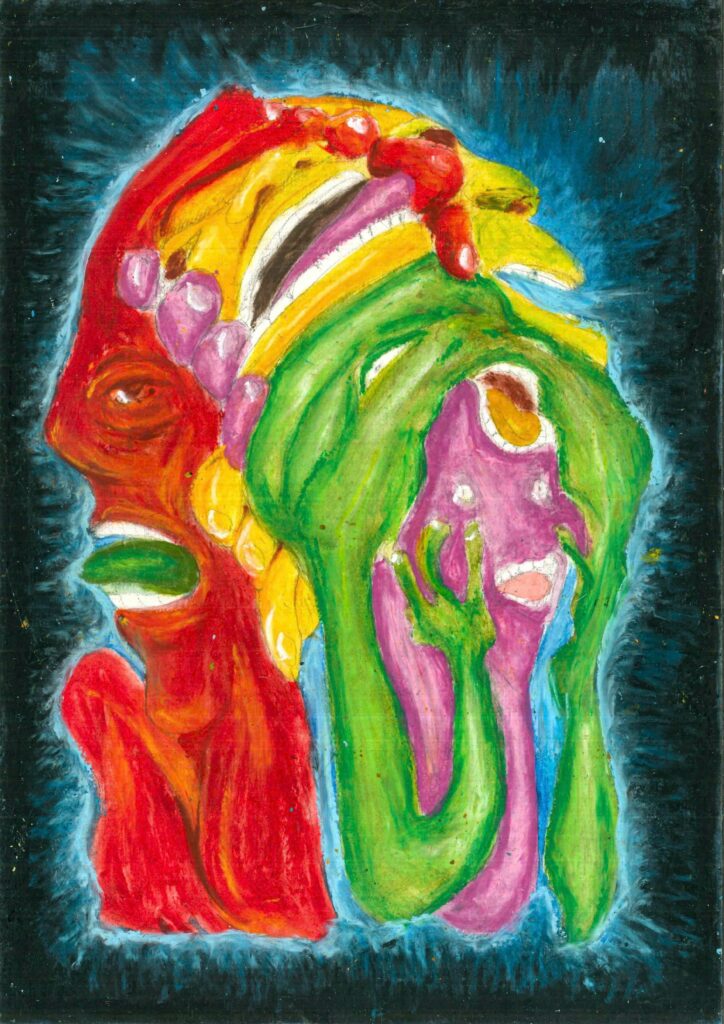
I draw myself. Each painting – a light illuminating the suppressed corner of my soul. Each brush – my emotional turbulence and insecurities, a reflection of how feelings shape my sense of self. Through my expressionist works, I trace the roots of these emotions, both personal and societal – turning inner chaos into deeper philosophical questions.
Way Back Home
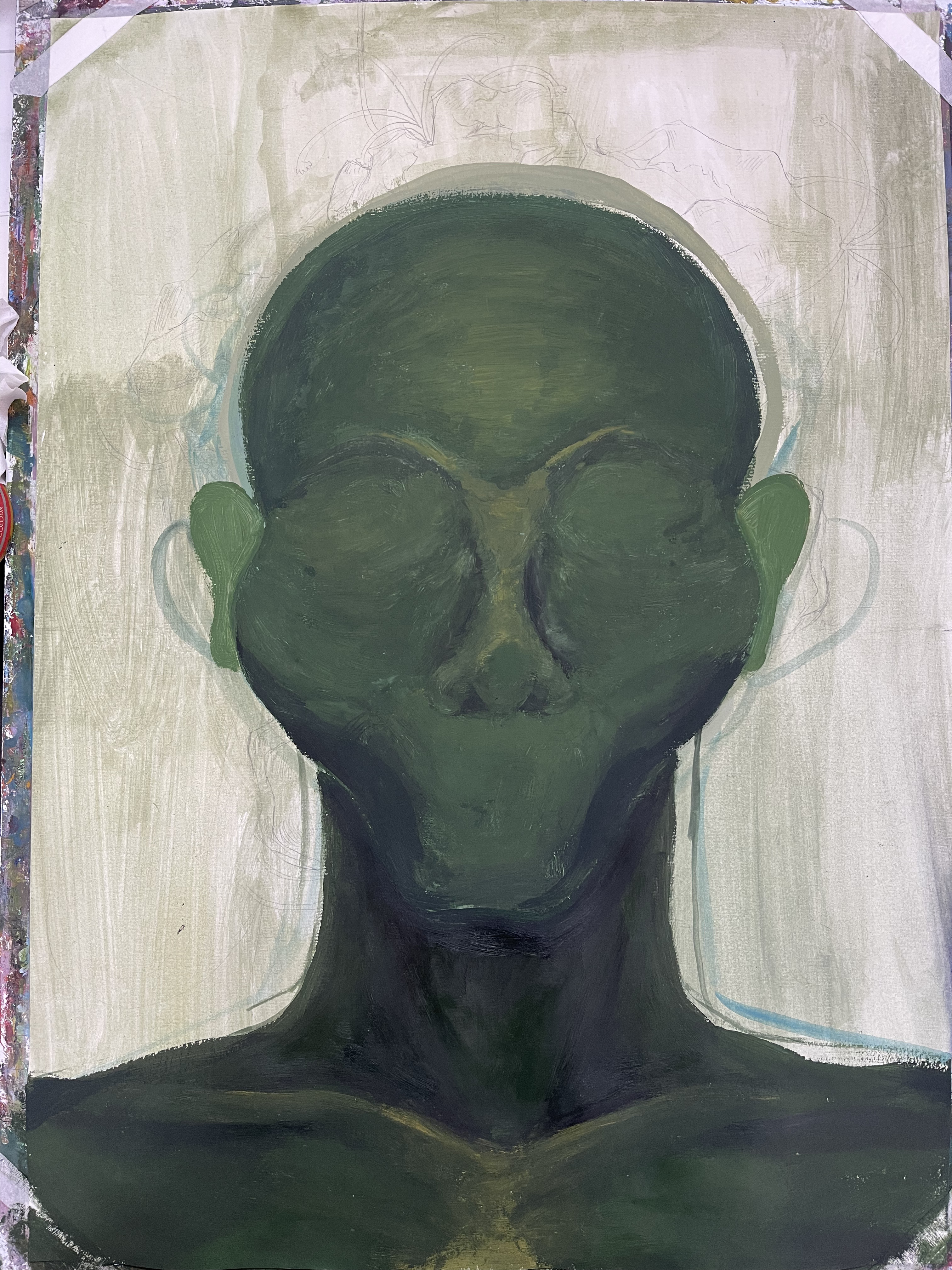
It had been so long since I worked on canvas. I had almost forgotten how thirsty it is as it drinks up all the diluted paint before I was ready to blend. My first base layer barely showed up. After a few trials, I realized I had to forgo my usual method of layering thin washes on top of each other and letting each layer meet the next to form a unique conversation between old and new.
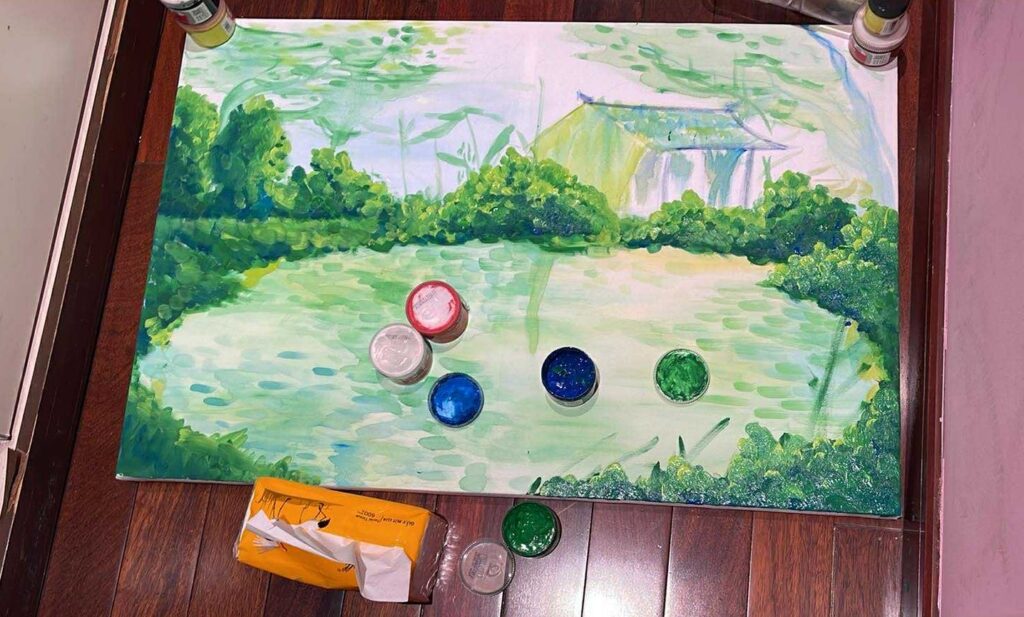
I tried mixing colors on the palette, but they dried far faster than I expected. This A1 sized canvas needed giant amounts of paint. Yet by the time I finished mixing the next color on my palette, the previous layer on the canvas had dried up, sending me into panic as I swayed my arm to blend one layer into another before the moment passed.
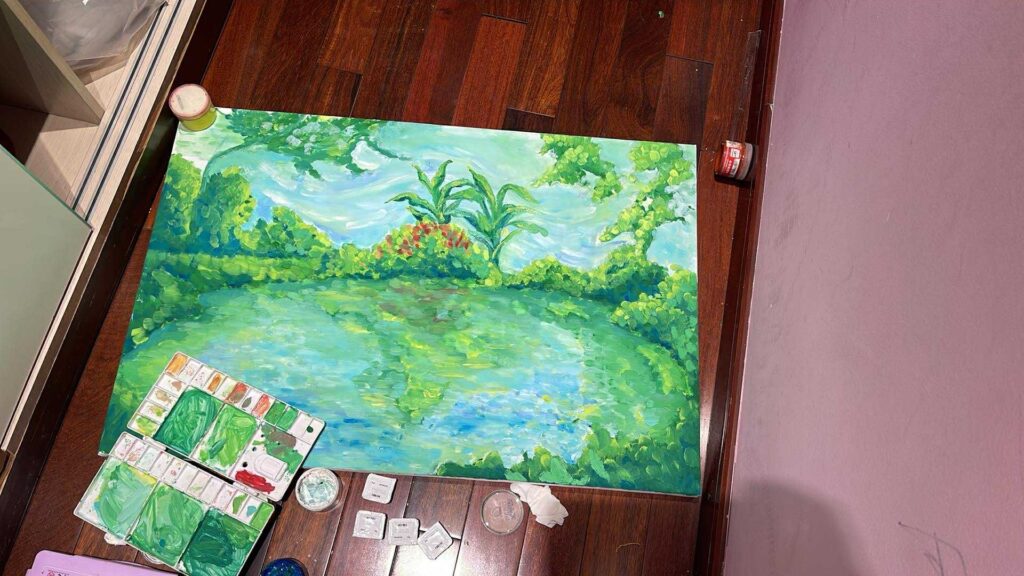
So I abandoned the palette. I put the colors straight onto the canvas, blending as I went, darkest first, then light, letting the surface itself dictate the rhythm. Its chaos was thrilling. The canvas felt alive, a giant palette in its own right, inviting me to play and to let go of precision and just respond.
Why Could You Not
When creating this piece, I looked into the torment that surfaces when the lights go out – that moment when it’s just me and the darkness, voices begin to plague. Regret, shame, and guilt start to crawl out from the corners of my mind, probing at my eyelids.
My first sketch was more brutal. I imagined those thoughts physically prying my eyelids open, leeching onto the body. Those thoughts violently yank one from peace. But that didn’t capture the strange, mocking quality of self-torment I wanted to express.
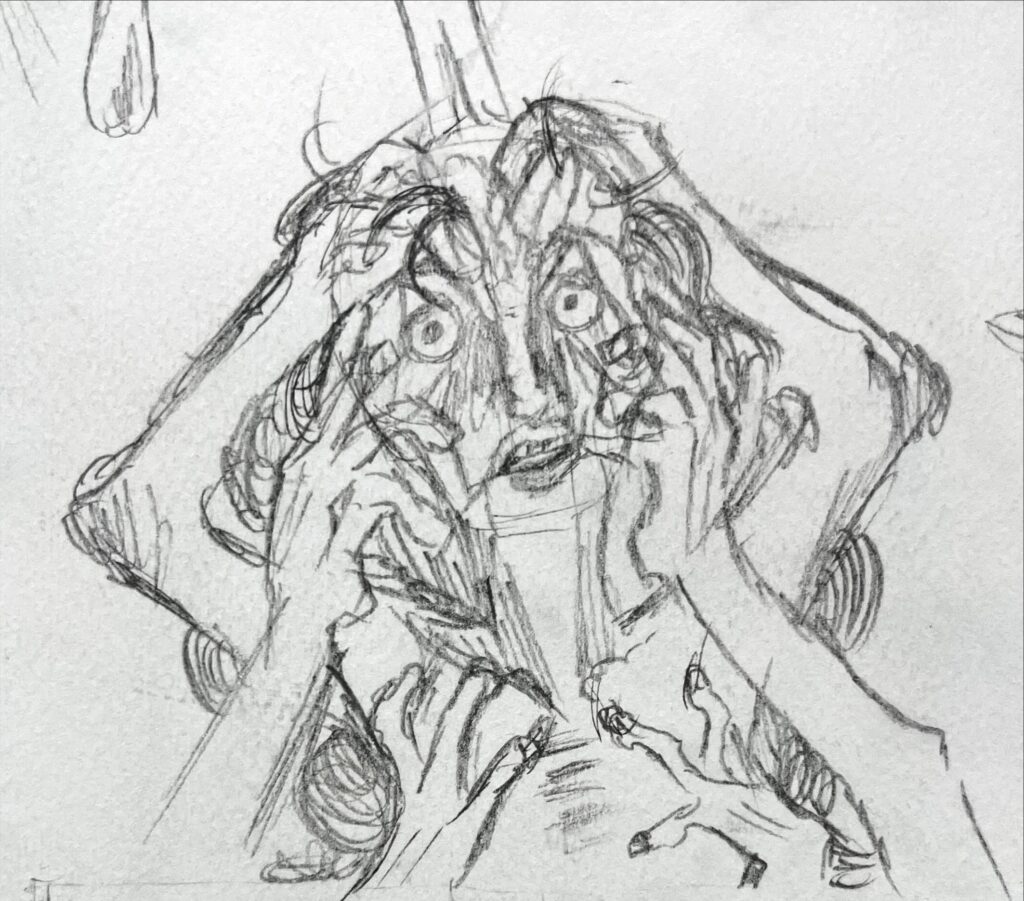
I shifted toward something subtler. The hands of guilt and shame reach out to taunt. They prod; they pinch at the face almost playfully the way inner voices mock rather than attack.
I incorporated gloriosa lilies into these hands, their poison churning the stomach, symbolizing the inner sickness that self-blame breeds.
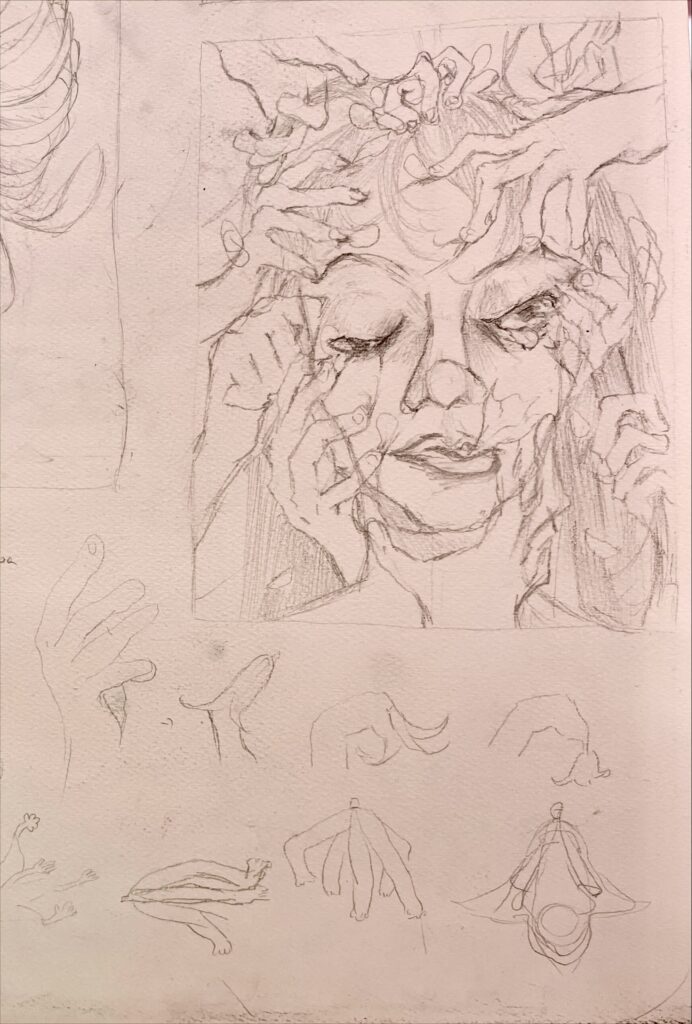
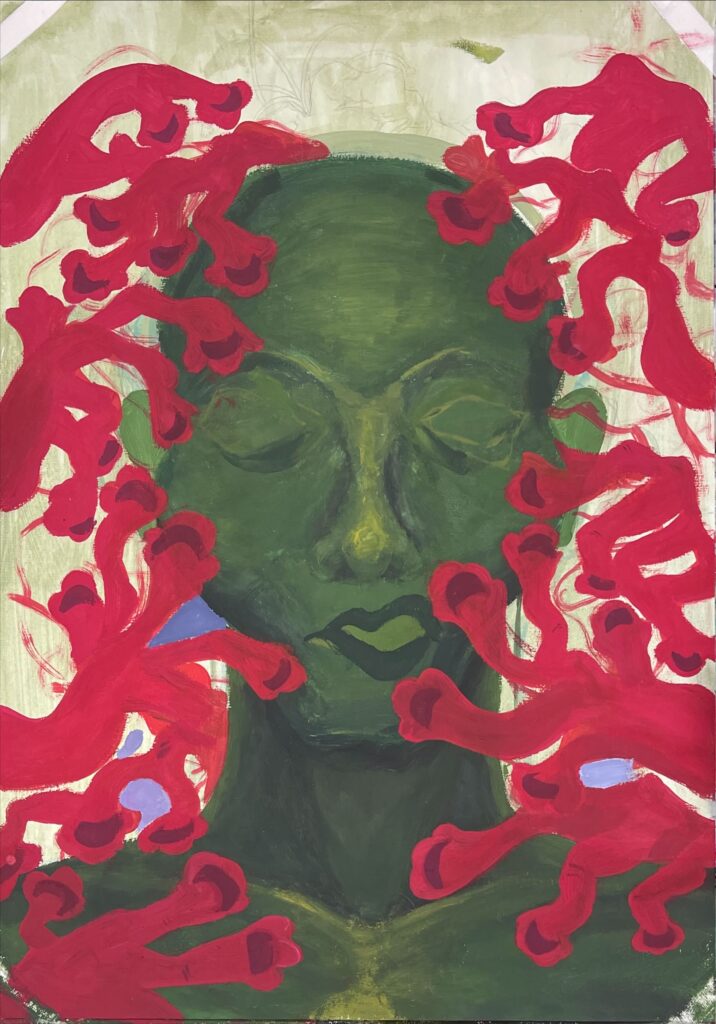
The finger petals eventually became laughing mouths. They sneer the way guilt ridicules.

What more can I do?
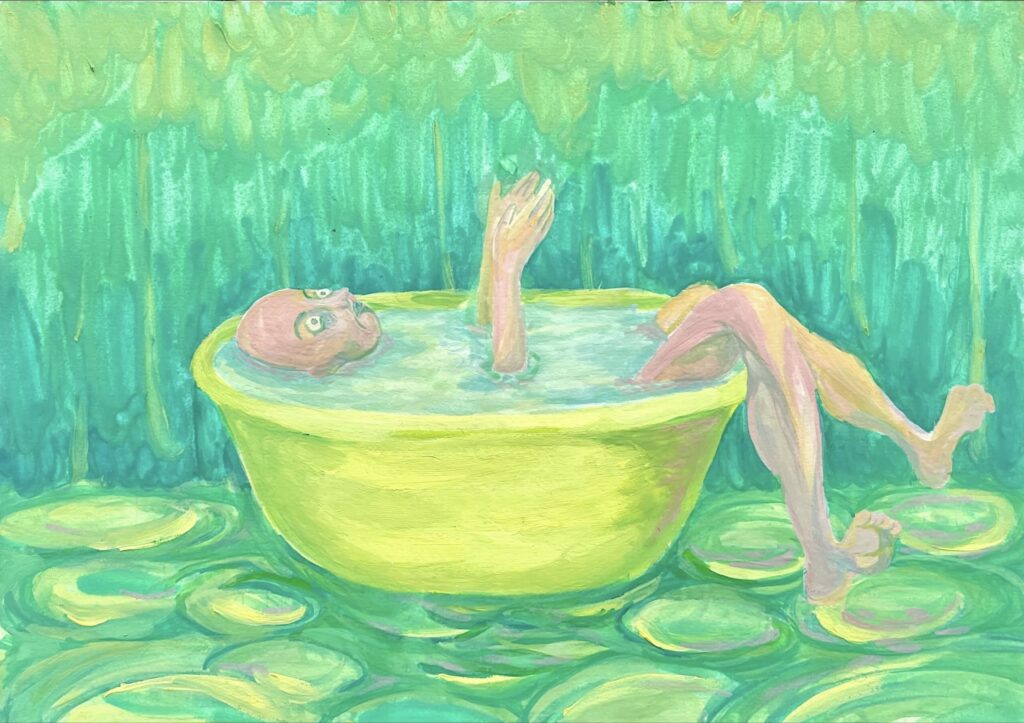
It was raining as I walked home from a study session. Rain has always been nature’ lullaby for me, a rare luxury of calm in Hanoi’s burning summer. For a moment, I wanted to halt and simply exist in its hums.
But my mind raced ahead. Buried under thoughts, I continued home, not daring to turn my back on the refreshing lull. It was in that tension between the stillness I craved and the restlessness pushing forward that this painting was born.
The figure leans toward the sky, reaching for more despite being in an already full tub of abundance. It is caught between the desire to strive for more and the pull of serene stillness. It is that in-between, the fragile space where satisfaction and ambition collide, that I wanted to capture.

Rapture
The sketch came to be one time I tried alcohol. It was half a bottle of vodka at a sleepover. I finally understood that burning feeling people crave. It lightens your head. It thins your reasoning. And I started to go with whatever feels good.
We were watching 2 Broke Girls. The first season kicked off with tasteful remarks. Yet near the end, when we were already tipsy, the jokes leaned more towards lazy stereotypes – all kinds of things that should never be funny. Yet we laughed. Maybe it was the vodka. Maybe it was the atmosphere. In that moment, laughter was easier than thinking. Fun triumphed over reason.
In hindsight, I felt a sting of guilt. I blurred the line. I chose to indulge.
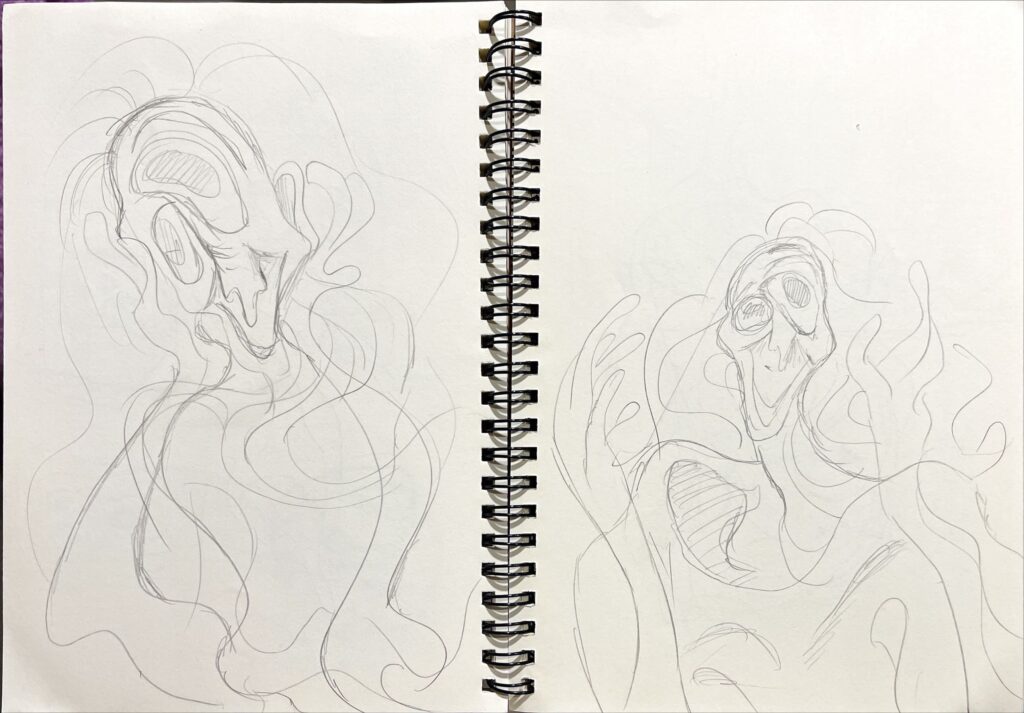
I realized I wasn’t so different from my father. He’s usually a man of order and responsibility, but when alcohol hits, usually during family reunions, he lets go. He forgets himself. His kindness, like ours that night, gets swallowed by the flame of indulgence.
When morning came, he fell silent because of the remarks he made. Both of us, in our own ways, were scorched by moments where pleasure drowned thought.
Alcohol feels like fire to me now. It warms first, then consumes. What it leaves behind is the guilt, the regret lingers long after the night ends.
Delusion
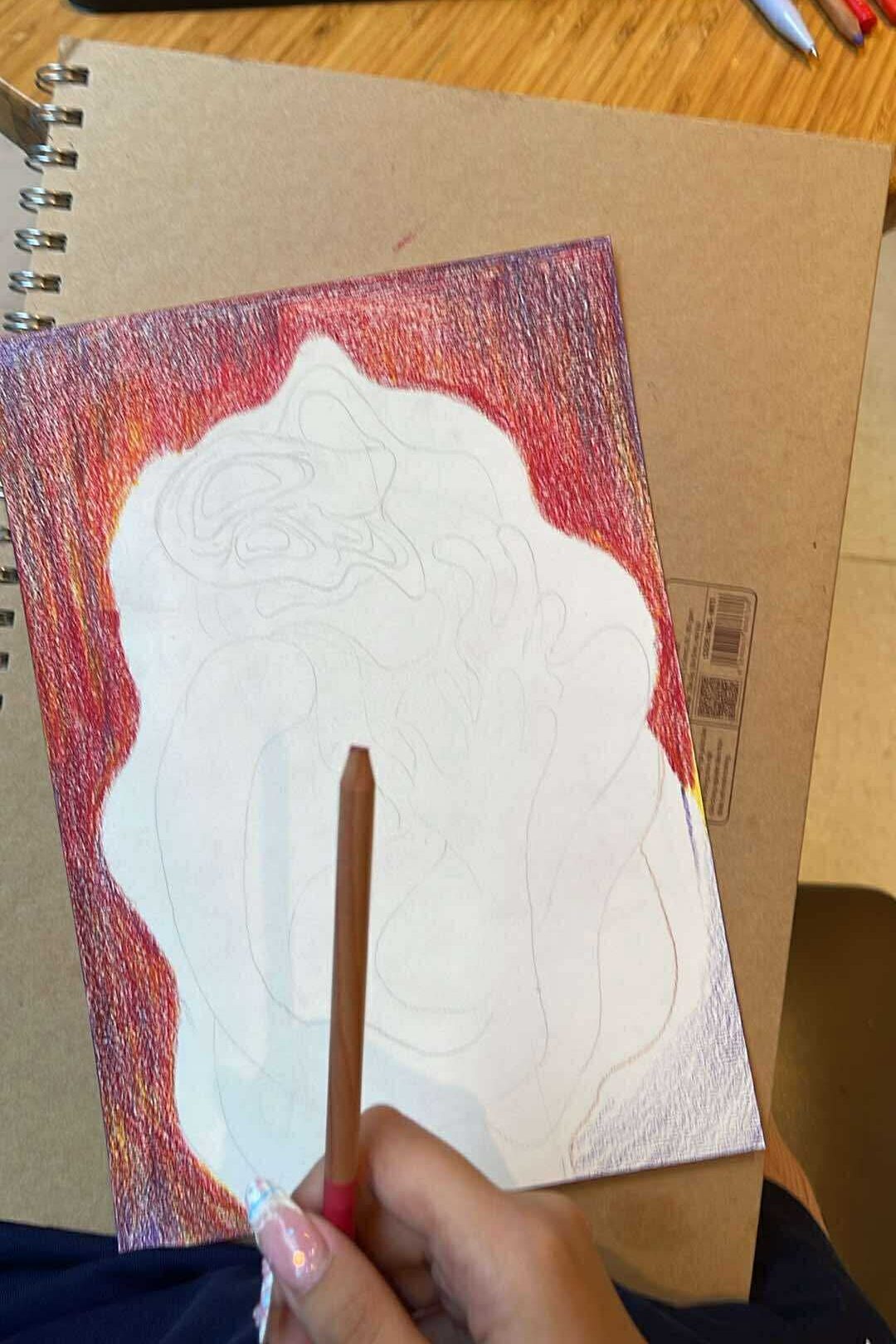
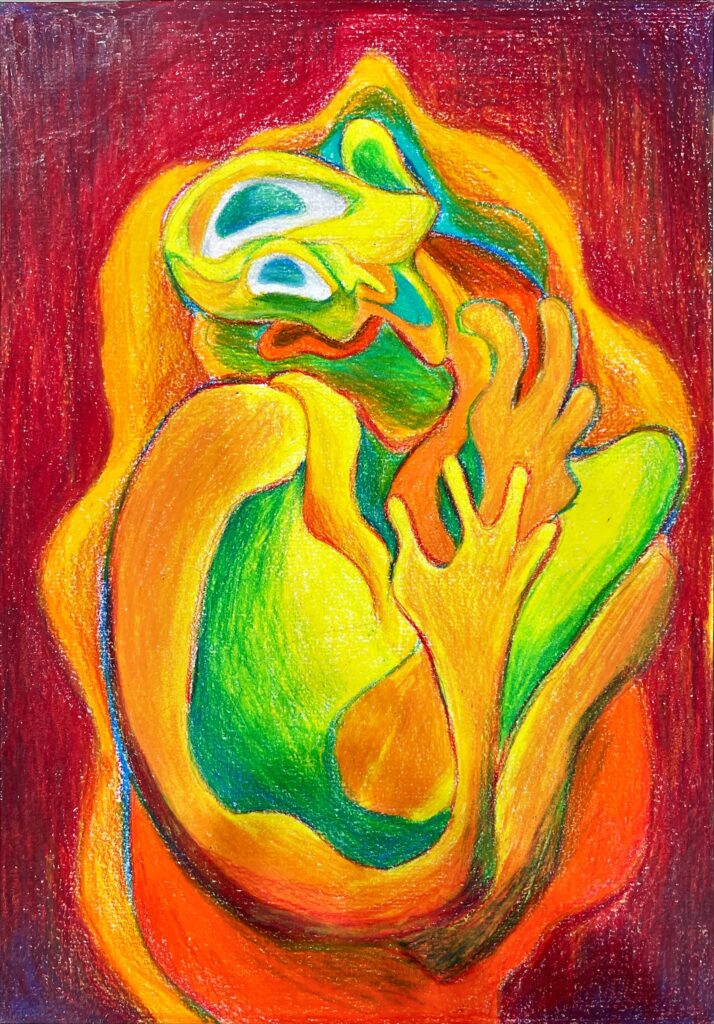
The work depicts a bleeding heart flower whose toxins are capable of burning the skin. The figure crawls into it, drawn by the sweet nectar, seemingly unconcerned that it will blister their skin. The pose was inspired by a mat Pilates move I tried when I joined a temporary Pilates class to fix my spine – a result from a year of intense cramping for high school admission exams. My back, a little mischievous in its own way, remembered the effort. I return to that pose often to ease the tension after long days, and to remind myself that I don’t have to endure intense strain just to reach the nectar of a flower.
The red of the flower carries more than the warning of burning; it’s the color of passion, desire, temptation. While the figure chases the sweetness, the flower latches onto its back, drawing livelihood. It’s a reflection of society itself: it offers people little delights in exchange for exploits the drive and productivity it inspires. The piece is both playful and cautionary, a reminder of the cost of chasing what seems sweet while ignoring the burns along the way.